What's New in July?

We’re excited to share everything the team has shipped over the past month. July brought powerful new features, expanded monitoring capabilities, flexible billing options, and significant performance upgrades.
🆕 New: Checkly Uptime Monitoring is Live!
We’ve just launched a powerful new way to monitor your systems with Checkly Uptime Monitoring—a lightweight, cost-effective solution for the fundamentals of reliability.
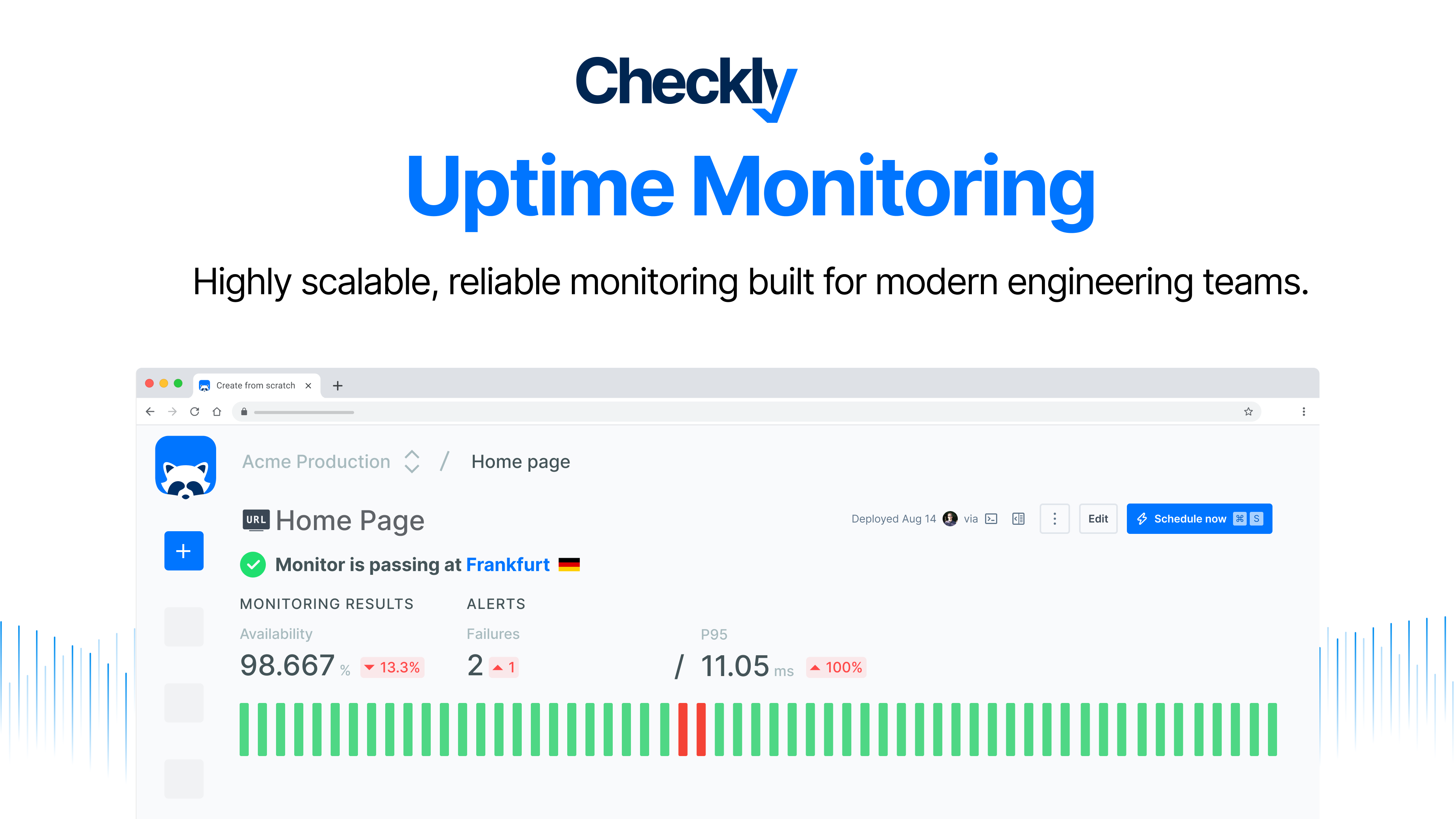
With Uptime Monitoring, you can now run simple monitors to ensure your websites, APIs, ports, and background jobs are always up and performing as expected. It’s perfect for dev teams who want fast feedback and broad coverage without the overhead of complex monitoring setups.
What’s included:
URL monitors for your websites and docs
TCP monitors for ports and services
Heartbeat monitors for cron jobs and scheduled tasks
It’s built to scale and integrates seamlessly with your Monitoring as Code setup, so you can define checks in code and manage everything through your Git workflows.
Whether you're just starting to monitor production or want to consolidate tools across teams, Checkly Uptime Monitoring gives you a simple, scalable foundation—without breaking the bank.
🚀 Deploying the Checkly Agent on Kubernetes just got easier
With the new Checkly Helm chart repository, deploying the Checkly Agent for Private Locations is now much simpler. To get started, add the repo:
helm repo add checkly <https://checkly.github.io/helm-charts> If you had already added the repo before, run helm repo update to retrieve the latest versions of the packages. You can then run helm search repo checkly to see all available charts.
To install the agent chart, run:
helm upgrade --install my-agent checkly/agent --set apiKeySecret.apiKey=pl_... This makes deploying Private Location agents faster and easier to automate as part of your workflows.
👉🏼 Learn more in the Helm chart repository
If you have questions or want to contribute, open an issue or reach out in our Community Slack.
🔁 Network retries for API checks & URL monitors
You can now enable network retries to re-run a check only when it fails due to a network-related issue, such as timeouts, DNS failures, or connection resets.
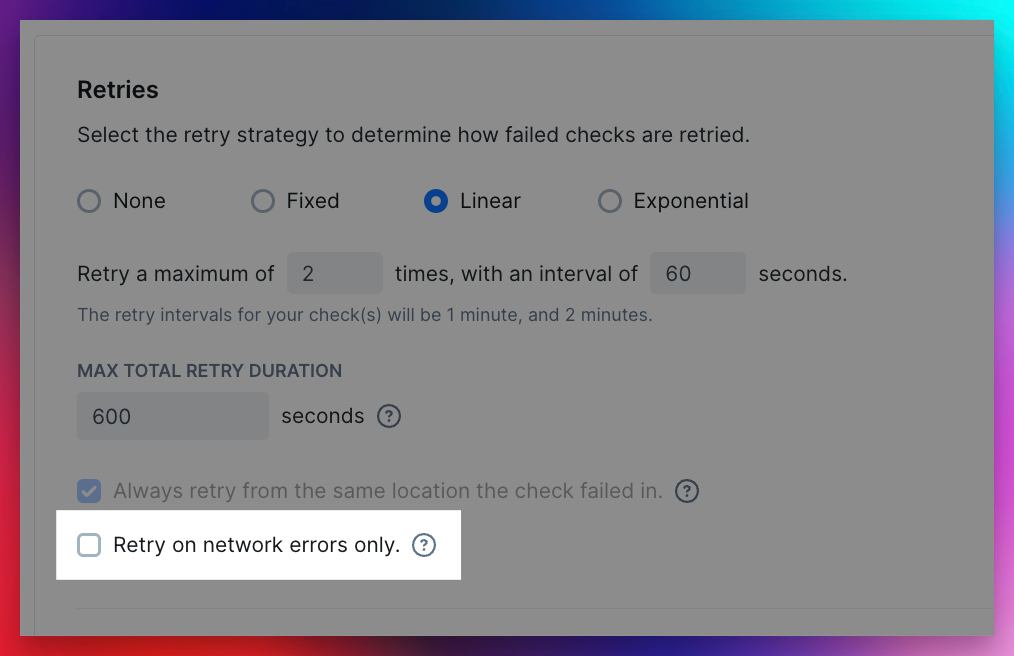
This feature is available for API checks and URL monitors. When enabled:
Checks will retry on network errors such as
ECONNRESET,ETIMEDOUT,ENOTFOUND, and more.Checks won’t retry on HTTP errors (e.g. 4xx, 5xx), failed assertions, or any other type of failure.
This helps reduce noise from transient network errors, while still surfacing real issues in your application.
👉🏼 If you’re using the CLI, network retries are available from version 6.2.0 onwards. Learn more in the constructs reference.
👉🏼 Terraform and Pulumi support is currently in development and will be available soon.
🕵🏻 Developer Experience
Checkly Agent 6.1.0. is here.
With support for Playwright Check Suites (beta) in private locations, improved secret scrubbing, smaller Docker images, and enhanced observability tools. Learn all about it here.
New trace viewer!
Up until last week we were relying on trace.playwright.dev to display Playwright traces directly in.app.
As of last Monday, we launched our very own self-hosted trace viewer — say hello to trace.checklyhq.com. Same debugging insights, with faster loads, enhanced security and more flexibility for the future.
No changes needed on your end, just a smoother, more integrated experience, that now supports the “open snapshot” function!
Assets v2: Faster Check Results Loading
We’ve rebuilt our artifact handling infrastructure to deliver significantly faster and more reliable check result performance.
Faster results loading including playwright artifacts, including traces, screenshots, videos, and DOM snapshots
Smoother video playback with optimized blob storage handling
More reliable artifact storage using unique identifiers to prevent conflicts between runs
Improved security with parallel processing for secret scrubbing in logs and traces
All check runs now use this new system by default, no action required on your end.
Got feedback? We’d love to hear from you!
You can share your feedback on our feedback hub or connect via the Checkly community Slack.
Happy monitoring!